Choosing the right power rating is more than technical jargon. It can affect how well you cut, shape, and smooth every project. Understanding what motor horsepower truly means helps anyone in metalworking or fabrication avoid mistakes and achieve consistent, professional results. This guide breaks down the real-world impact of horsepower so you can make choices that match your workshop needs.
Table of Contents
- Defining Motor Horsepower In Grinders
- How Horsepower Affects Grinder Performance
- Types Of Motors Used In Grinders
- Choosing The Right Horsepower For Your Needs
- Common Mistakes When Selecting Motor Power
Key Takeaways
| Point | Details |
|---|---|
| Understanding Motor Horsepower | Motor horsepower is crucial for determining grinding performance and capabilities in metalworking tasks. Each increment in horsepower enhances material processing effectiveness. |
| Choosing the Right Motor Type | Induction and VFD motors are preferred, offering distinct advantages in efficiency and versatility for different grinding applications. |
| Evaluating Material Needs | Selecting the appropriate horsepower requires consideration of material type, frequency of use, and desired surface finish for optimal results. |
| Avoiding Common Selection Mistakes | Overestimating horsepower can lead to inefficient operations, so it’s essential to match motor specifications with specific grinding needs. |
Defining Motor Horsepower in Grinders
Motor horsepower represents the fundamental power measurement that determines a grinder’s performance and operational capabilities. In the context of metalworking and fabrication, horsepower directly translates to the machine’s ability to drive abrasive belts through challenging material removal tasks with consistent speed and torque.
When evaluating motor horsepower for grinders, craftspeople must understand that the rating indicates the motor’s mechanical output potential. A typical belt grinder motor configuration ranges from 1 to 3 horsepower, with each increment providing incrementally more robust material processing capabilities. Research indicates that rated motor power plays a critical role in determining a machine’s effectiveness across different grinding applications.
The practical implications of motor horsepower extend beyond simple numerical ratings. Higher horsepower motors deliver more consistent performance, reduced vibration, and enhanced precision during intensive grinding operations. Factors like motor RPM, voltage requirements, and mechanical design significantly influence how effectively that horsepower translates into actual material removal. Professional knife makers and metal fabricators typically seek motors between 1.5 and 2 horsepower to balance power efficiency with controlled material interaction.
Understanding motor horsepower requires appreciating its nuanced relationship with grinding performance. While higher horsepower suggests increased capability, the motor’s quality, electrical efficiency, and mechanical integration matter equally. Craftspeople should evaluate not just the raw horsepower number, but how that power is managed and applied through the grinder’s overall mechanical design.
How Horsepower Affects Grinder Performance
Motor horsepower directly impacts a grinder’s performance through its ability to generate consistent power, manage material removal, and maintain operational stability. The fundamental relationship between horsepower and grinding effectiveness determines how efficiently craftspeople can process different materials and achieve precise results.
In metalworking and fabrication, higher horsepower translates to more robust grinding capabilities. Motor efficiency studies demonstrate that power output significantly influences a grinder’s ability to handle challenging material removal tasks. For example, a 1 HP vs 2 HP VFD grinding comparison reveals substantial differences in performance across various workpiece materials and grinding techniques.
The practical implications of horsepower extend beyond raw numerical ratings. Higher horsepower motors provide several critical advantages: reduced vibration, more consistent material removal, enhanced precision, and improved thermal management. Professional knife makers and metal fabricators typically seek motors between 1.5 and 2 horsepower to balance power efficiency with controlled material interaction. The motor’s ability to maintain steady RPM under different load conditions becomes crucial for achieving uniform grinding results.
Ultimately, understanding horsepower requires a nuanced approach. While higher horsepower suggests increased capability, craftspeople must consider factors like motor quality, electrical efficiency, and mechanical integration. The most effective grinders balance raw power with sophisticated design, ensuring that each horsepower translates into meaningful performance across diverse fabrication challenges.
Types of Motors Used in Grinders
Motor selection represents a critical decision for craftspeople seeking optimal grinding performance across various metalworking and fabrication applications. Different motor types offer unique characteristics that directly impact grinding efficiency, precision, and overall operational reliability.
Induction motors dominate the grinding equipment landscape, with wound rotor motor configurations providing exceptional versatility for demanding material removal tasks. These motors typically feature robust design elements that enable consistent power transmission and variable speed control. Choosing the right motor for a 2x72 belt grinder involves carefully evaluating specific performance parameters such as horsepower, voltage requirements, and mechanical integration.
Professional fabrication environments commonly utilize three primary motor types: single-phase induction motors, three-phase motors, and variable frequency drive (VFD) motors. Single-phase motors work well for smaller workshop setups, while three-phase motors provide superior power and smoother operation for intensive grinding applications. VFD motors offer the most advanced control, allowing precise speed adjustment and enhanced thermal management across different workpiece materials.
Ultimately, motor selection extends beyond simple specifications. Craftspeople must consider factors like electrical efficiency, mechanical durability, thermal performance, and compatibility with their specific grinding requirements. The most effective motor transforms raw electrical power into controlled, consistent grinding performance, enabling metalworkers to achieve exceptional precision and material removal across diverse fabrication challenges.
Choosing the Right Horsepower for Your Needs
Selecting the appropriate motor horsepower represents a nuanced decision that directly impacts a craftsperson’s grinding performance, material removal capabilities, and overall workshop productivity. The right horsepower balance enables precision, efficiency, and optimal operational control across diverse fabrication challenges.
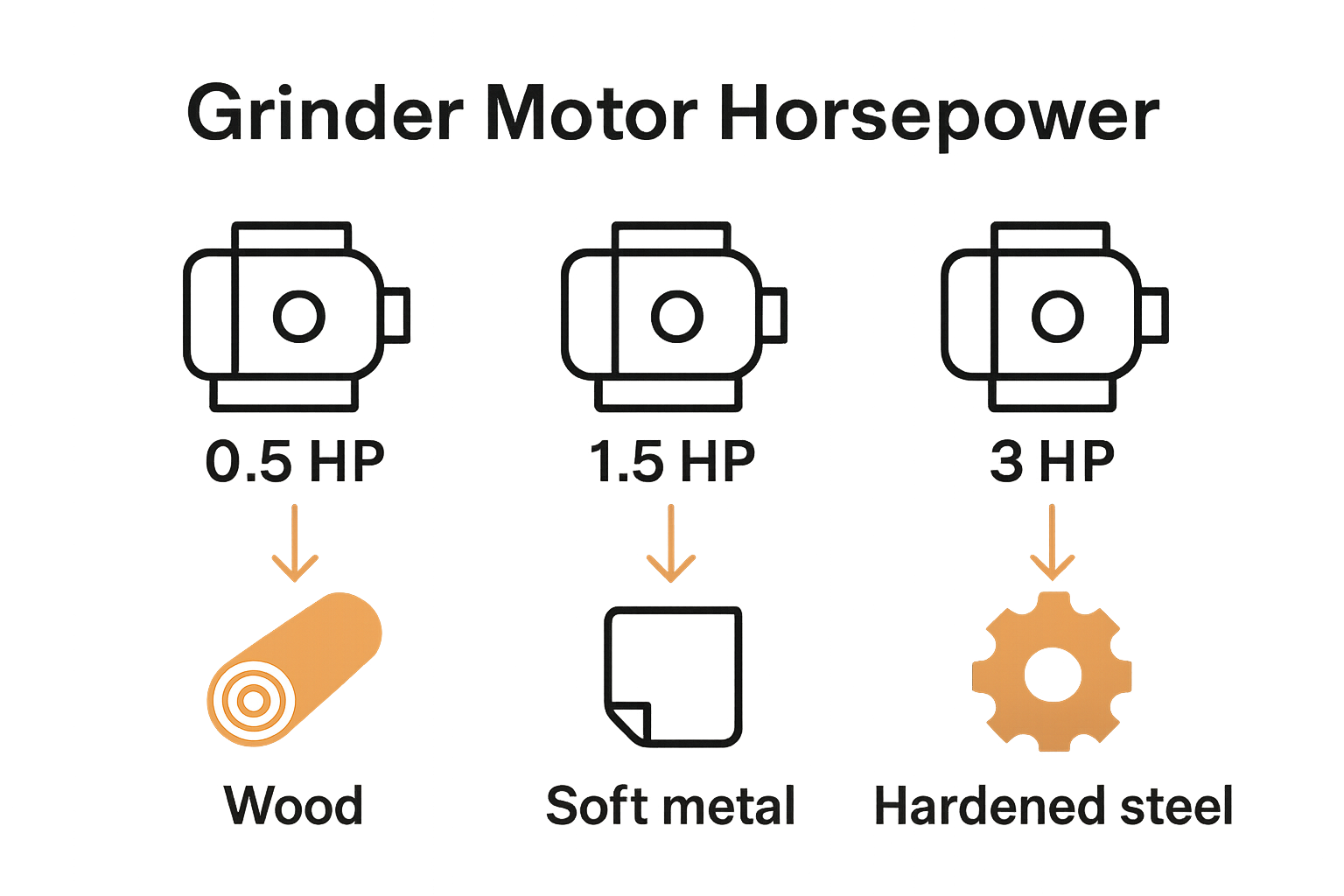
Motor power selection requires careful consideration of multiple factors. Permanent Magnet Synchronous Motor design guidelines highlight the critical relationship between motor specifications and specific grinding requirements. For knife makers and metal fabricators, horsepower requirements typically range from 1 to 3 HP, with each increment providing substantially different performance characteristics. A 1.5 HP motor might suffice for hobbyist work, while professional fabrication shops often demand 2 HP or higher to handle more intensive material removal tasks.
Workshop professionals should evaluate horsepower requirements through several key lenses: material type, grinding frequency, workpiece complexity, and desired surface finish. Softer materials like aluminum might require less powerful motors, whereas hardened steels demand higher horsepower for consistent material removal. Factors such as belt speed, motor efficiency, and thermal management also play crucial roles in determining the most suitable motor power for specific grinding applications.
Ultimately, horsepower selection transcends simple numerical comparisons. The most effective motor transforms electrical input into precise, controlled grinding performance. Craftspeople must balance raw power with mechanical sophistication, considering factors like voltage stability, vibration control, and long-term operational reliability to achieve exceptional metalworking results.
Common Mistakes When Selecting Motor Power
Motor power selection represents a critical decision for craftspeople, with potential errors capable of dramatically compromising grinding performance, equipment longevity, and overall workshop efficiency. Understanding the most common pitfalls can help metalworkers and fabrication professionals make more informed motor selections.
Self-optimizing grinding machine research reveals several key mistakes craftspeople frequently make when selecting motor power. The most prevalent error involves dramatically overestimating or underestimating power requirements. Professionals often choose motors with excessive horsepower, believing more power automatically translates to better performance. In reality, oversized motors waste electrical energy, generate unnecessary heat, and can cause increased mechanical stress on grinding equipment.
Technical considerations extend beyond simple horsepower ratings. Workshop professionals frequently overlook critical factors such as motor efficiency, thermal management, and voltage stability. Grinding operation parameter studies demonstrate that matching motor characteristics to specific material properties and grinding techniques matters more than raw power output. Soft materials like aluminum require different motor configurations compared to hardened steels, and failing to account for these nuanced requirements can lead to suboptimal grinding performance.
Ultimately, motor selection demands a holistic approach. Craftspeople must balance power requirements with mechanical sophistication, considering factors like vibration control, electrical efficiency, and long-term operational reliability. The most effective motor transforms electrical input into precise, controlled grinding performance, bridging the gap between raw power and technical precision.
Choose the Right Motor Horsepower for Your Grinder Needs Today
Finding the perfect motor horsepower for your grinder is crucial to achieving consistent, precise, and efficient metalworking results. Whether you are handling hardened steel or softer materials you need power that matches your project without sacrificing control or causing unnecessary wear. Our selection of 2x72 Belt Grinder Motors & VFDs offers motors designed to deliver the ideal balance of torque, speed, and reliability discussed throughout the Motor Horsepower guide.

Take your grinding setup to the next level with our premium American-made grinders and accessories. Explore complete 2x72 Belt Grinder Kits built to handle various horsepower configurations for hobbyists and professionals alike. Visit diktatorgrinder.com now to find your perfect motor match and experience fast shipping and expert support for every purchase. Don’t wait to upgrade to power that works exactly as your craft demands.
Frequently Asked Questions
What is motor horsepower in grinders?
Motor horsepower in grinders refers to the power measurement that determines a grinder’s performance. It indicates the motor’s ability to drive abrasive belts through material removal tasks with consistent speed and torque.
How does horsepower affect a grinder’s performance?
Higher horsepower in grinders leads to more robust grinding capabilities, including reduced vibration, consistent material removal, enhanced precision, and improved thermal management, which are crucial for achieving uniform grinding results.
What factors should I consider when choosing the right motor horsepower?
When selecting motor horsepower, consider material type, grinding frequency, workpiece complexity, desired surface finish, and the balance between raw power and the motor’s mechanical efficiency.
What are the common mistakes made when selecting motor power for grinders?
Common mistakes include overestimating or underestimating power requirements, overlooking motor efficiency and thermal management, and failing to match motor characteristics to the specific material properties and grinding techniques needed for optimal performance.